A BBC Picture, Written by Steve McQueen, Alastair Siddons, Directed by Steve McQueen.
In the second entry of Steve McQueen’s made for TV series of films titled Small Axe, Mangrove (2020) revolves around the eponymous restaurant, located at 8 All Saints Road, Notting Hill, and its flamboyant owner, Frank Crichlow (Shaun Parkes). At the height of its prominence, this real-life restaurant became a cultural hub that drew artists, intellectuals, and activists. The film details the restaurant and its inhabitants who become central to one of the defining court cases in the history of the UKs civil rights battle. McQueen’s Small Axe series focuses on the lives of Black immigrants in London from the 1960s to the 1980s, and each entry tells a unique story from a varied perspective.
The trial of the ‘Mangrove Nine’ is infamous in British history for being the first judicial acknowledgement of behaviour motivated by racial hatred within the Metropolitan Police. Despite the huge strides that are still necessary to be made in our society, this remains a landmark case and one that is ripe for turning into a film, and there is no better man to do that than Steve McQueen. Instead of making this a drama entirely about the system and the police, he centres the story very much in the Black experience and specifically that of the everyday people who would become known as the ‘Mangrove Nine’.
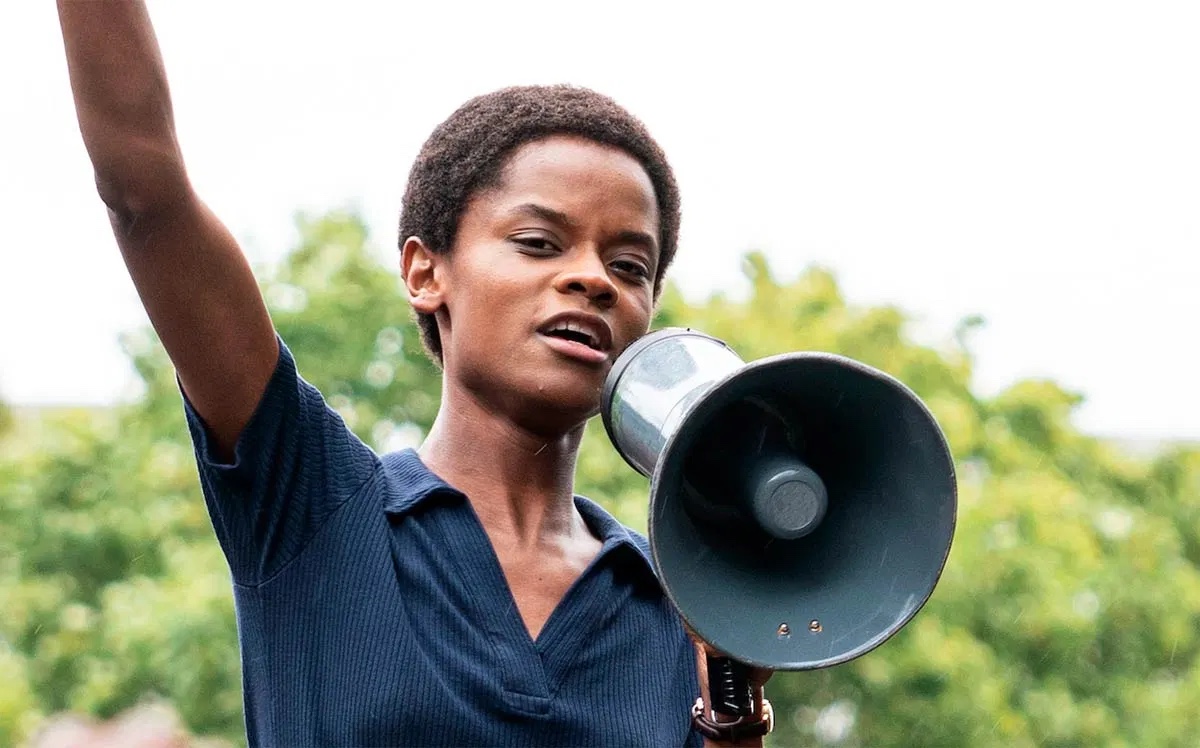
The first half of the film really deals with how Frank (Shaun Parkes) and his regulars at the Mangrove are being regularly attacked and harassed by the police due to their race, and how this brings them into contact with Altheia (Letitia Wright), the leader of the British Black Panthers, and how this dynamic will shape the rest of their lives. The atmosphere in the restaurant itself is so authentic and joyous, which allows for an even bigger contrast and heartbreak when you see how the police routinely disrupt this peace with their hatred. When the Black community in Notting Hill decide enough is enough and stage a protest, violence ensues between police and protestors, leading to the ‘Mangrove Nine’ being arrested and put-on trial for incitement of riots.
From here on in the film becomes a courtroom drama, and one of the most effective ones in years, because it isn’t worried about sharp dialogue or showy moments, but it is rooted in centuries of hardship and struggle, and the sense of injustice that simply will not stand anymore. Seeing the police throughout the film constantly terrorising the community, saying things like “whoever draws the ace of spades has to go out and nick the first Black bastard they lay eyes on”, and all round being abusive and discriminatory, is so hard to watch in the first half, but the second half of the film needs that gravity to be in place for the stakes and pay off to be as great as they are.
The film is a true ensemble piece, with everyone able to shine in certain moments; Letitia Wright, Shaun Parkes, Malachi Kirby, Rochenda Sandall, Alex Jennings, Sam Spruell, and Jack Lowden are all exceptional and balance each other out perfectly.
Spruell is cruel and menacing as the central police figure Frank Pulley, Kirby is passionate and engaging as Darcus Howe, Sandall (who has a fascinating backstory as the daughter of a police officer and the granddaughter of a member of the Windrush generation) is fiery and compelling as Barbara Beese, Jennings is composed as Judge Edward Clarke, and Lowden is charming as famed lawyer Ian Macdonald.
The two central roles go to Shaun Parkes as Frank and Letitia Wright as Altheia, and it is these two performances; one as a man broken by years of attacks and discrimination who just wants to be able to live his life, and the other of a passionate and slightly naïve young woman desperate to make a change in the world, that really contrast beautifully and hold the film together.
There is a long running debate of whether this is film or tv (I personally see it as a TV movie) but whatever you call it, Steve McQueen has made one of the most compelling and relevant pieces of entertainment of the year.
A final note about the lives of the Mangrove Nine – The case was thrown out by the presiding magistrate, who found that evidence from twelve police officers showed they equated black radicalism with criminal intent, but the Director of Public Prosecutions reinstated the charges and the Mangrove Nine were re-arrested in a series of dawn raids. So much more progress needs to be made to achieve true racial justice.
Rating = 4.5/5
 Howe's World of Film and TV