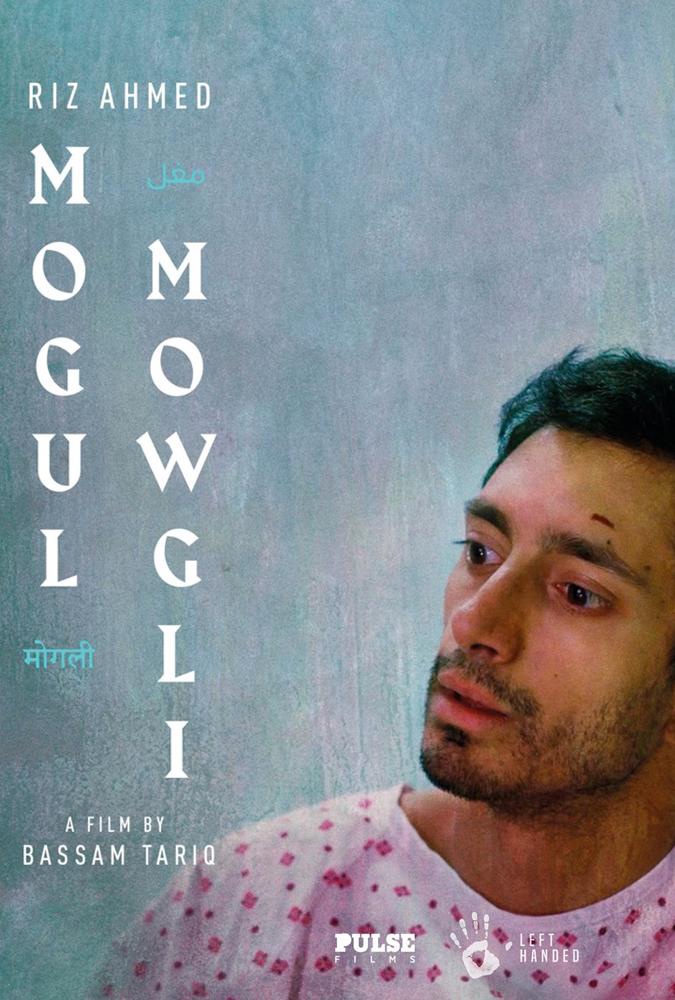
A BFI Picture, Written by Bassam Tariq, Riz Ahmed, Directed by Bassam Tariq.
On the brink of his first international tour, Zed (Riz Ahmed), a British Pakistani rapper, decides to fly home to the UK to visit the family he has not seen in two years. In the midst of trying to reconnect with his parents, he is suddenly struck down by an autoimmune disease. As his condition worsens and his big breakthrough moment is in danger of vanishing into thin air, Zed descends into a physical and emotional crisis, amplified by vivid hallucinations.
As Zed returns home from New York to his London based family, who in many ways are very different to him (or who he sees himself as), within their interactions we quickly get lots of discussion around race and culture, and how the individuals in the family have differing views, with many believing the West forces them to tame their culture in order to fit in, and that Zed is allowing that to happen to him. This is something Zed battles against, seemingly wanting to be a part of the Western world and be seen purely for his rap and not for his race, but when he is struck down by an autoimmune disease just before he is due to head out on tour, all of this comes deeply into question, and he is forced to wrestle with his legacy and feelings of cultural displacement that he has tried to run from all his life.
As Zed is hospitalised and his illness continues to worsen rapidly, we see some truly distressing scenes that will resonate deeply with those who have been through this battle, and it is impressive that this film is willing to show it in all its brutal, and at times painfully mundane, reality. It is during this battle where Zed also has to allow his estranged family to help him, and to re-evaluate the other relationships and prioritises as his health deteriorates.
It also then becomes very much a mental battle for Zed, fighting his demons as his body fight his illness, and this is represented in a very unique way by director Bassam Tariq. Zed goes through multiple hallucinatory visions and almost horror like sequences, with very deliberately culturally specific tones to them, and it is through this that we get the internal battle inside Zed portrayed and see how he grows throughout the film. While this decision is certainly admirable and really makes the film stand out with its visual flair, it does struggle to gel with the tone and narrative of the rest of the film, and almost takes you out of the story as an audience by doing so.
The film is very much a showcase for leading man Ahmed, who is in almost every scene and is able to show us the great range he has as his characters life deteriorates. This is a film he co-wrote and clearly draws on his own experiences as a rapper and as a British-Pakistani man, particularly in a post 9/11 world. In his time as ‘Riz MC’, Ahmed got great acclaim and garnered real controversy with his song “post 9/11 blues” where he details how the reaction to the attack dominated and forever changed society and popular culture, as well as markedly changing the way him and his community were treated at large. He is already garnering awards attention for Sound of Metal (2020), so it is unlikely he will also be contending for this film too, but in another year, this deeply personal and very nuanced performance would be a serious awards contender.
Overall, while not always working as one flowing film and maybe having too many different ideas that it wants to get across at once, Mogul Mowgli is a unique and deeply personal film about cultural displacement, career goals impacting family life, and dealing with illness. Riz Ahmed is one of the finest actors that Britain has to offer right now.
Rating = 3.5/5
 Howe's World of Film and TV